
Music Marketing: The Ultimate Artist’s Guide for 2026

Introduction: Why 2026 Is a Breakout Year for Independent Artists
The music industry has never been more accessible to independent artists than it is right now.
In 2026, the combination of streaming platforms, short-form video discovery, and direct-to-fan tools has created an ecosystem where artists can build sustainable careers without waiting for a label to notice them.
Spotify, Apple Music, TikTok, YouTube, Instagram, and Discord have become the infrastructure of modern music marketing and mastering them is no longer optional.
Here’s the reality many artists overlook: marketing only works when the music is high-quality and culturally aligned with how people actually discover music today.
In 2026’s saturated landscape, where hundreds of millions of tracks compete for listener attention, mediocre mixing, generic songwriting, weak vocal performances or not being able to hook a listener in under 15 seconds will kill your campaign before it starts. The song itself has become part of the marketing.
A memeable lyric, a hooky opening line, or a quotable phrase can do more for your music’s reach than any ad budget.
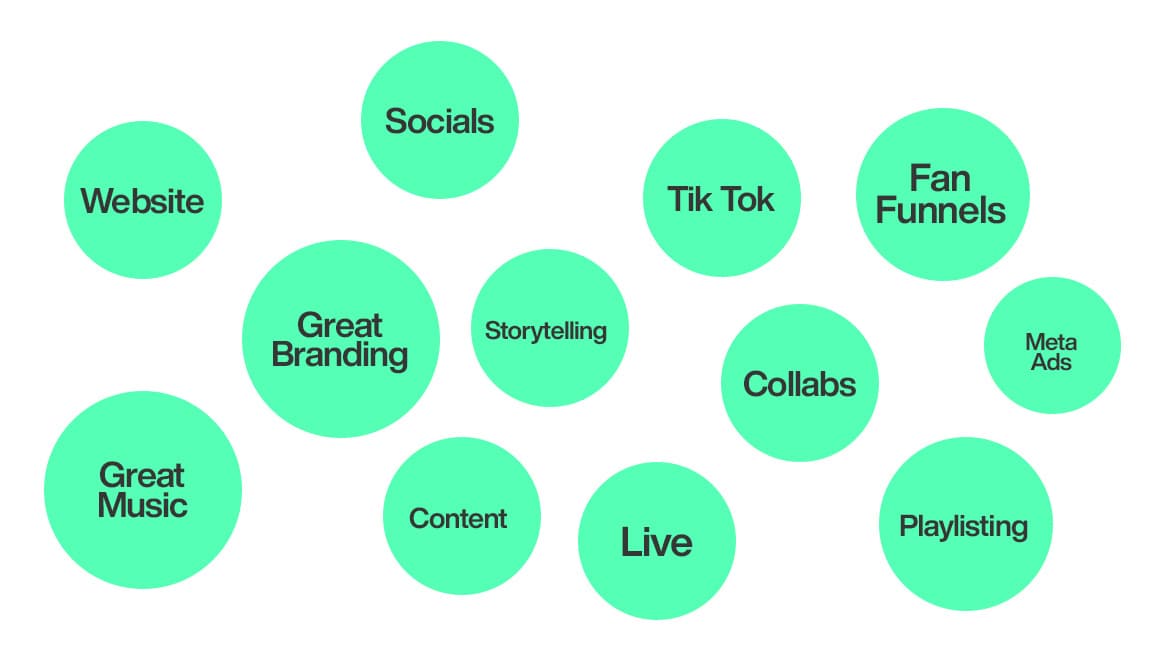
In 2026, artists need to attack every marketing angle simultaneously... DSPs, content creation, ads, playlists, brand building, and community while constantly improving the sound itself. This isn’t about choosing between great music and great marketing.
You need both. The artists who understand this are the ones filling up festival stages and watching their monthly listeners climb.
This guide is a practical, no-fluff playbook for DIY artists who want real streams and real fans not vanity metrics.
We’re going to cover everything from fixing your sonic foundation to the world of playlisting, to running direct-to-song Meta ads to building fan funnels that you actually own. If you’re ready to stop waiting for a viral miracle and start building a music career on your own terms, this is your roadmap for 2026.
#1 – Fix the Foundation: Your Sound, Story & Strategy
Before you spend a dollar on promotion or post a single TikTok, you need to confront an uncomfortable question: Is your music actually good enough to compete in 2026?
In today’s market, bad mixing or generic songwriting kills campaigns before they start.
Playlist curators skip past tracks that don’t meet professional production standards. Algorithms deprioritize songs with high skip rates.
Listeners, conditioned by years of polished releases, can hear the difference between a bedroom demo and a release-ready track within seconds.
Re-evaluate Your Sound Against 2026 Standards
This means you need to honestly assess your songwriting, arrangement, vocal performance, and engineering quality against what’s charting in your subgenre right now not what was working in 2020.
Do A/B comparisons with 2025–2026 reference tracks in your exact niche on Spotify, Apple Music, and YouTube Music. Listen on multiple systems. If your track sounds quieter, muddier, or less dynamic than the competition, you have work to do before marketing.
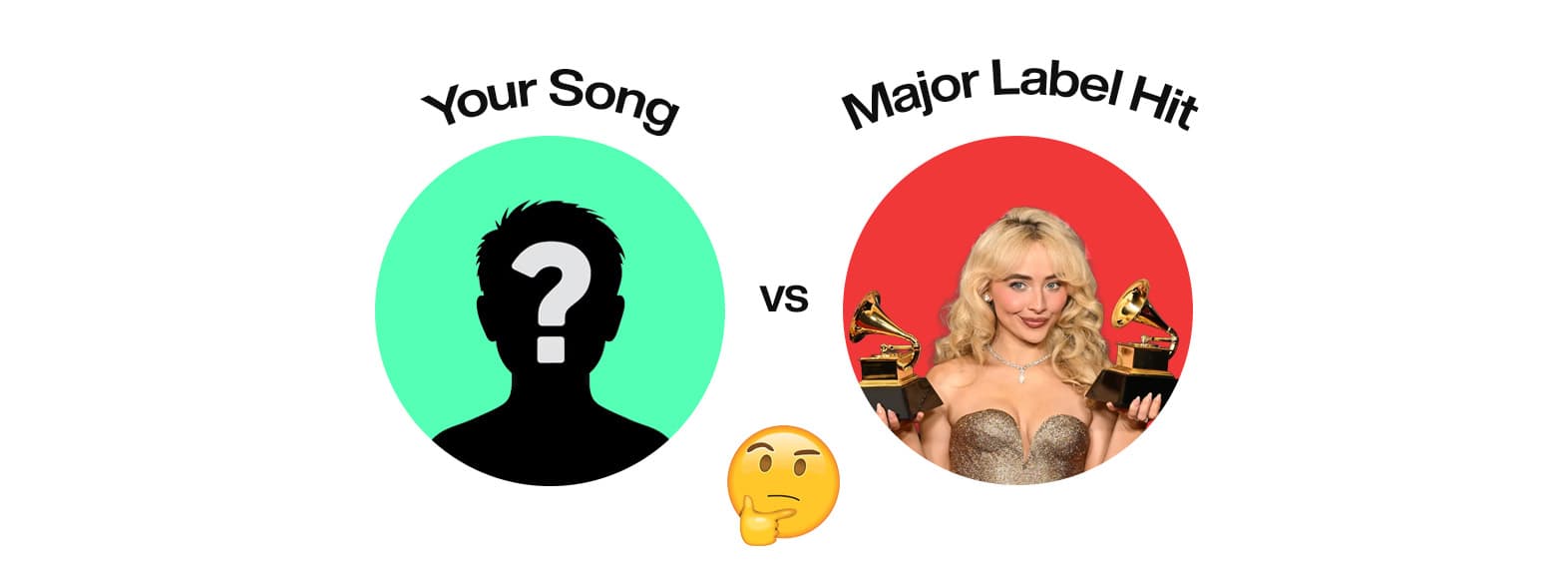
Getting objective feedback is critical. Your friends will tell you your music sounds great because they love you. Instead, seek feedback from producers, engineers, or industry professionals who will give you honest assessments.
Use reference playlists and loudness meters (LUFS) to benchmark your masters against popular songs in your genre.
The Song Itself as Marketing
In 2026, the song itself is a marketing asset. Think about:
- First 5 seconds impact: Does your track grab attention immediately? Streaming algorithms and social media platforms both reward songs that hook listeners instantly.
- Memeable lyrics and quotable lines: Can fans use your lyrics as TikTok captions? Are there phrases that work as hooks for short form content?
- Hooky one-liners: Is there a moment in your song that makes people want to share it?
These aren’t gimmicks they’re strategic considerations that determine whether your music spreads organically or dies in algorithmic obscurity.
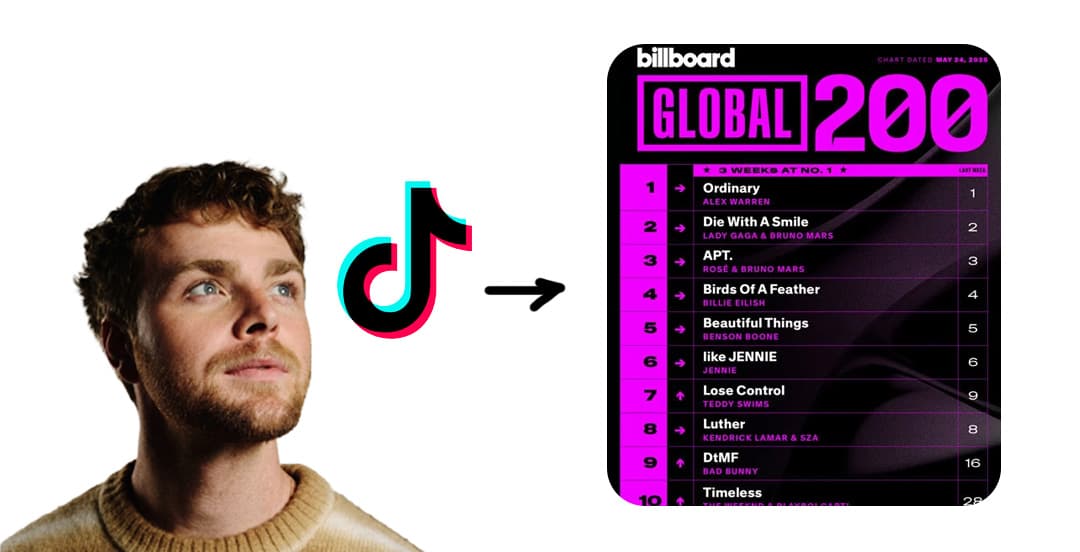
As much as artists don't want to even think about Tik Tok... its here to stay... After all, "84% of songs that entered the Billboard Global 200 in 2024 went viral on TikTok first". - Luminate & Tik Tok Newsroom.
Define Your Artist Story
Beyond the sound, you need a clear artist story. Ask yourself:
- Where are you from, and what shaped your sound?
- What are your key influences, and how do you blend them uniquely?
- What niche do you occupy?
- Why should listeners choose you over other artists they already love?
If you can’t articulate what makes you different from what already exists, your marketing will feel generic because it will be generic.
Build a Simple Release Strategy
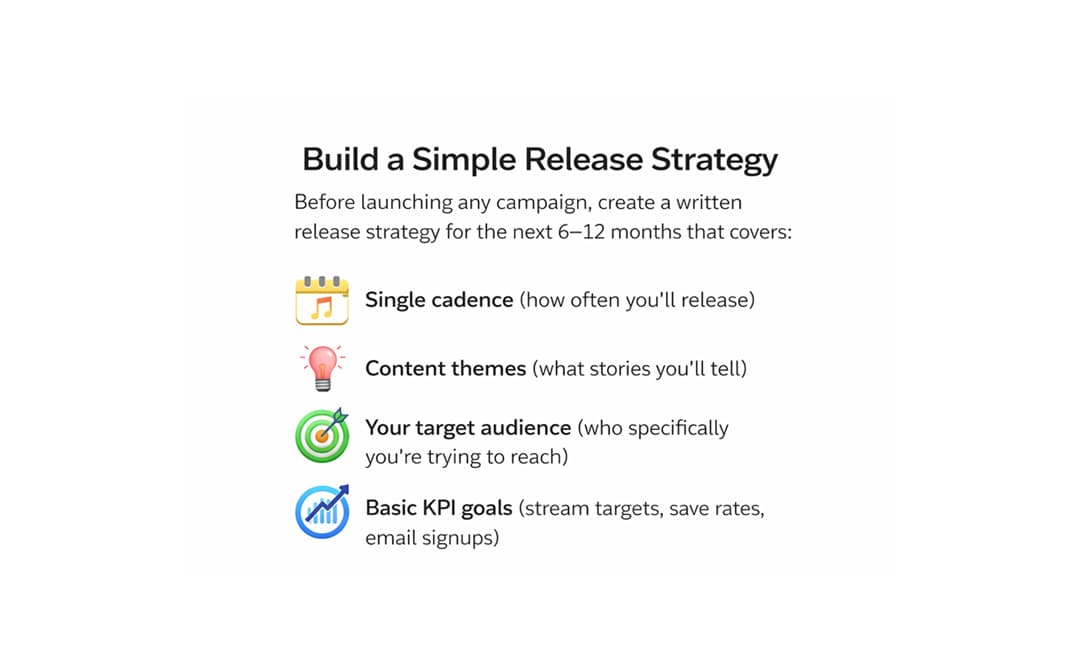
Before launching any campaign, create a written release strategy for the next 6–12 months that covers:
- Single cadence (how often you’ll release)
- Content themes (what stories you’ll tell)
- Your target audience (who specifically you’re trying to reach)
- Basic KPI goals (stream targets, save rates, email signups)
This document becomes your north star. Every marketing decision should ladder back to this strategy.
#2 – Own Your Artist Brand & Online Infrastructure
Your brand is how fans recognize and remember you across DSPs, socials, and live shows. In 2026, audiences expect visual cohesion. Think of it like building eras that fans can identify and connect with.
Visual Identity That Sticks
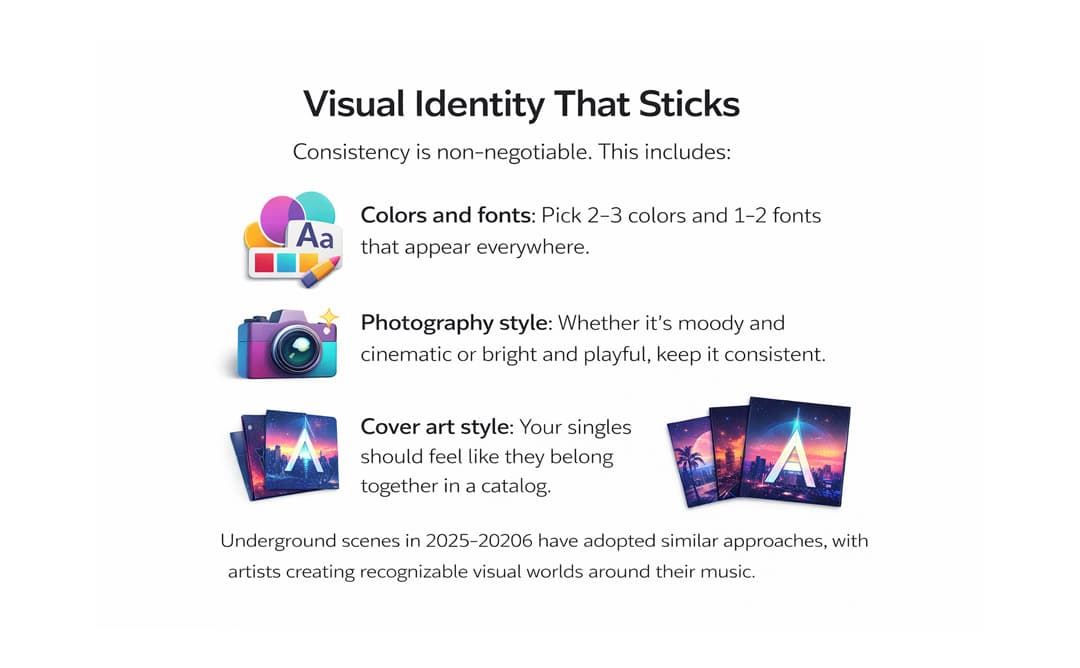
Consistency is non-negotiable. This includes:
- Colors and fonts: Pick 2-3 colors and 1-2 fonts that appear everywhere.
- Photography style: Whether it’s moody and cinematic or bright and playful, keep it consistent.
- Cover art style: Your singles should feel like they belong together in a catalog.
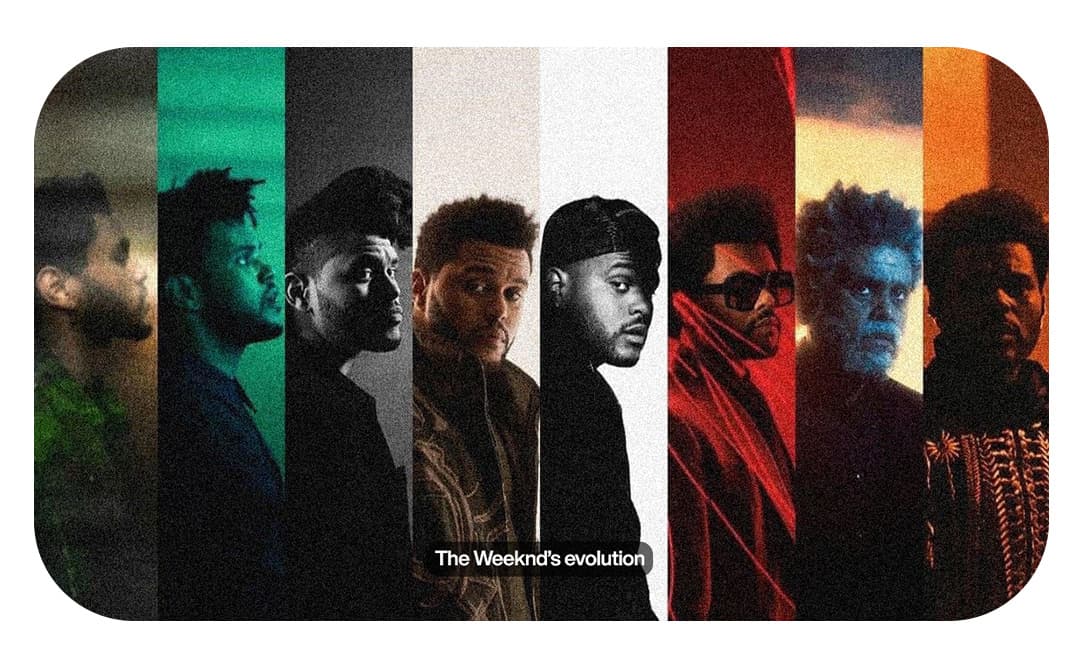
Look at how Taylor Swift’s Eras Tour created distinct visual identities for each album period, or how The Weeknd’s After Hours aesthetic carried across everything from music videos to press photos to social media presence.
Underground scenes in 2025–2026 have adopted similar approaches, with artists creating recognizable visual worlds around their music.
Your Website as Central Hub
Every artist needs a simple, fast website (Wix, Squarespace, or WordPress all work) that serves as your central hub. This should include:
- Links to your music on all streaming platforms
- A compelling bio that tells your story
- High-quality press photos that media can use
- Links to all social platforms
- An email signup form (this is critical we’ll cover why later)
- High quality press photos that blogs and media pages can use
Why is this important? Take tips from how brands gain traffic through SEO (search engine optimization). You as an artist are a brand, and a website allows you to get important updates out on the internet as quickly as possible.
Platform Consistency
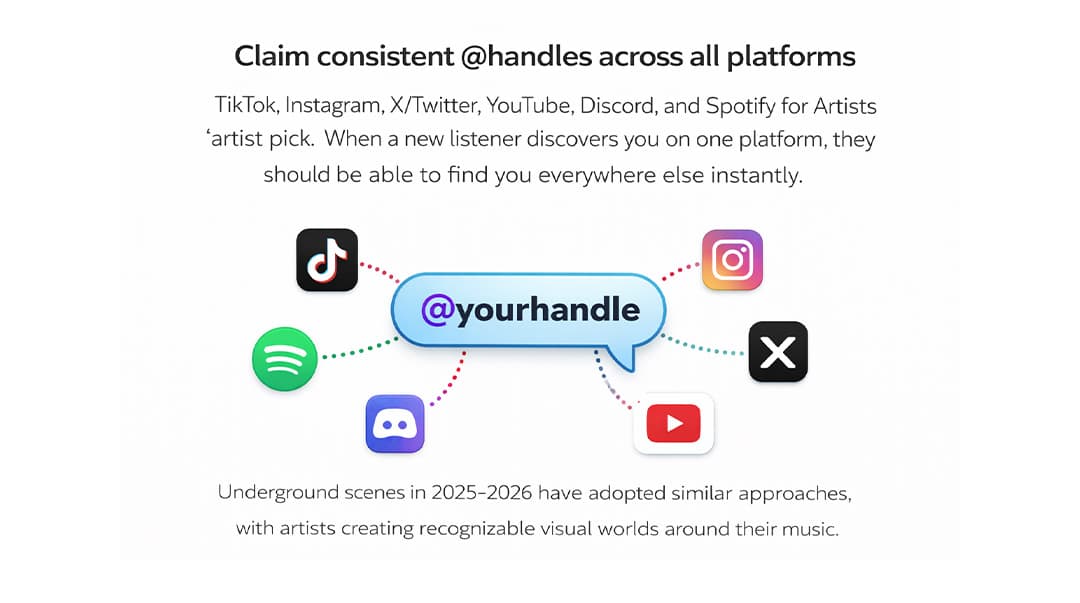
Claim consistent @handles across all platforms: TikTok, Instagram, X/Twitter, YouTube, Discord, and Spotify for Artists “artist pick.” When a new listener discovers you on one platform, they should be able to find you everywhere else instantly.
Claim and Optimize All DSP Profiles
In 2026, you should have active, optimized profiles on:
- Spotify for Artists
- Apple Music for Artists
- Amazon Music for Artists
- YouTube Official Artist Channel
- Deezer for Creators
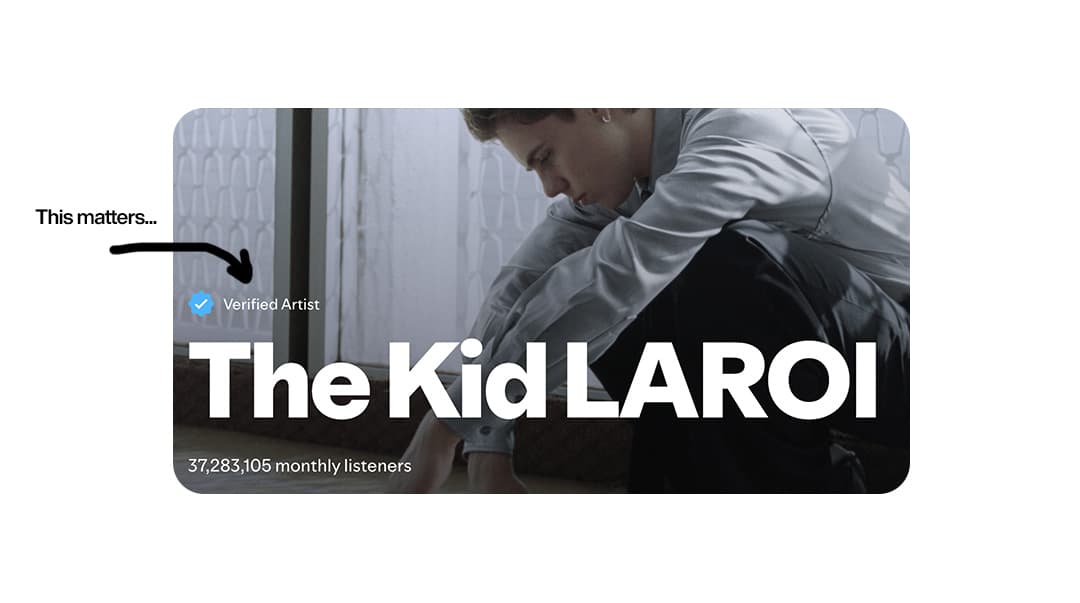
Each platform gives you tools to customize your profile, add upcoming releases, create playlists, and access analytics. An unclaimed profile signals to industry professionals that you’re not serious. A polished profile signals you’re ready for more opportunities.
#3 – The 2026 Release Strategy: Singles, Cadence & Algorithms
The surprise 12-track album drop worked for Beyoncé. It probably won’t work for you.
For most indie artists in 2026, frequent, focused single releases (every 4–8 weeks) outperform album drops for one simple reason: they give you more opportunities to trigger algorithms and stay visible to your audience.
How Algorithms Respond to Release Patterns
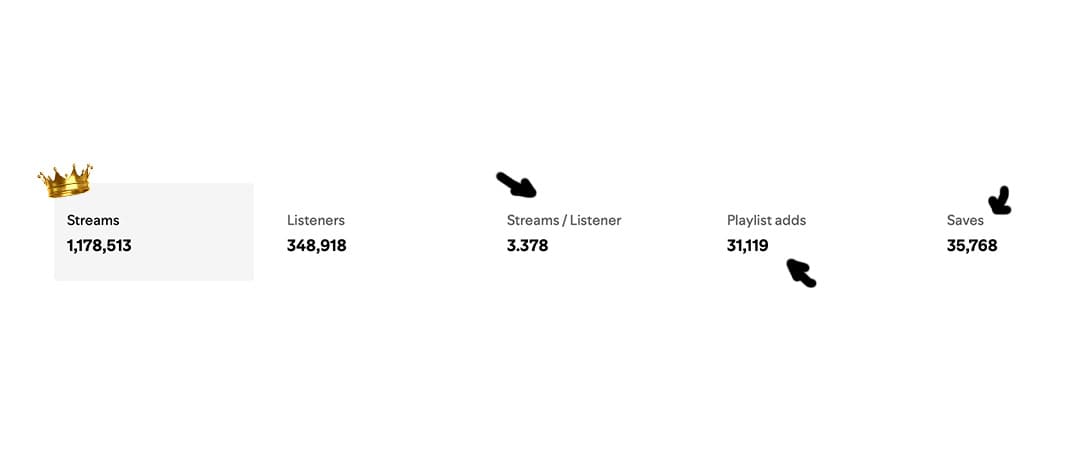
Spotify’s and Apple Music’s algorithms respond favorably to artists who release consistently and demonstrate strong engagement metrics. Within the first 28 days of a release, the algorithms are watching:
- Save-to-listener ratio
- Skip rate (how many people skip before the song ends)
- Completion rate
- Playlist add rate
- Repeat listens
A steady stream of singles lets you build momentum. Each release reactivates your Release Radar placements and gives new listeners fresh entry points into your catalog.
A 6-Month Timeline Example
Checkout our video on how to release a single in 2026:
Example Music Release Timeline
| Month | Release | Campaign Phase |
|---|---|---|
| January | Single #1 | Pre-save campaign (2 weeks) + launch week push & 3-4 weeks promotion |
| March | Single #2 | Same structure incorporating learnings from Single #1 |
| May | Single #3 | Building on audience growth from previous releases |
| July | Single #4 or EP | Compile singles into a larger body of work |
Here’s how a practical release calendar might look for early 2026:
Stagger Your Versions
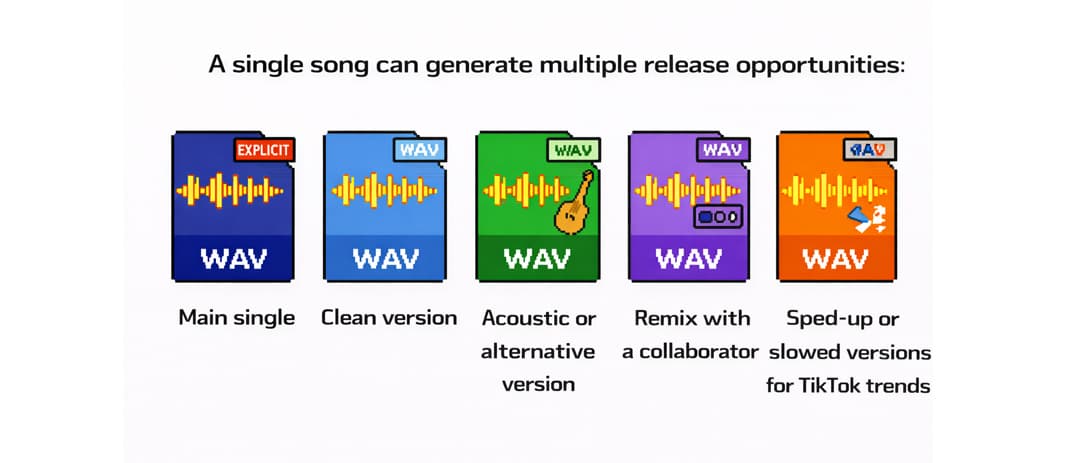
A single song can generate multiple release opportunities:
- Main single (explicit if applicable)
- Clean version
- Acoustic or alternative version
- Remix with a collaborator
- Sped-up or slowed versions for TikTok trends
Each version can be pitched separately and gives you additional content to promote. This is how you build a “world” around a song rather than treating each track as a one-and-done event.
Strategic Release Timing
Avoid dropping your latest release during major tentpole weeks when global pop stars are releasing music or during major award show weeks. Your track will get buried. Research the release calendar and find windows where you can capture more attention.
Pre-Release Checklist
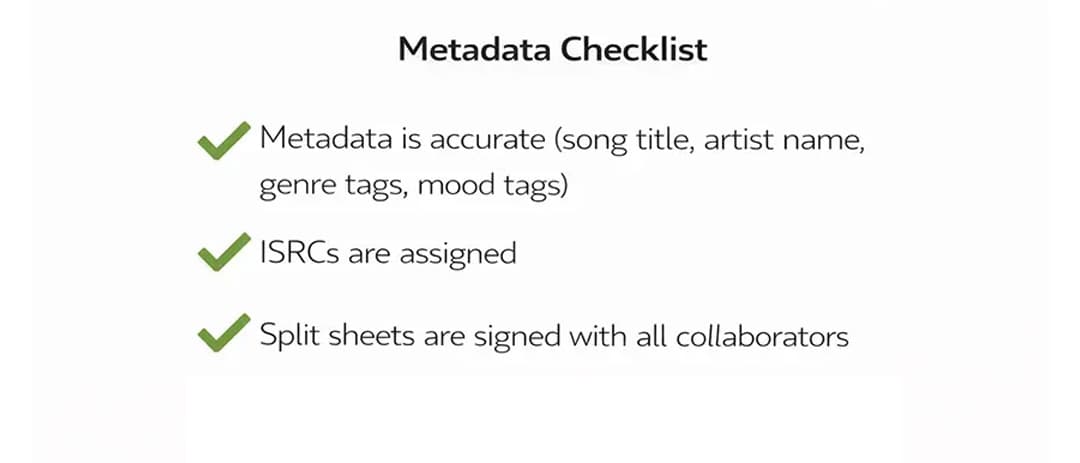
Before you hit publish, ensure:
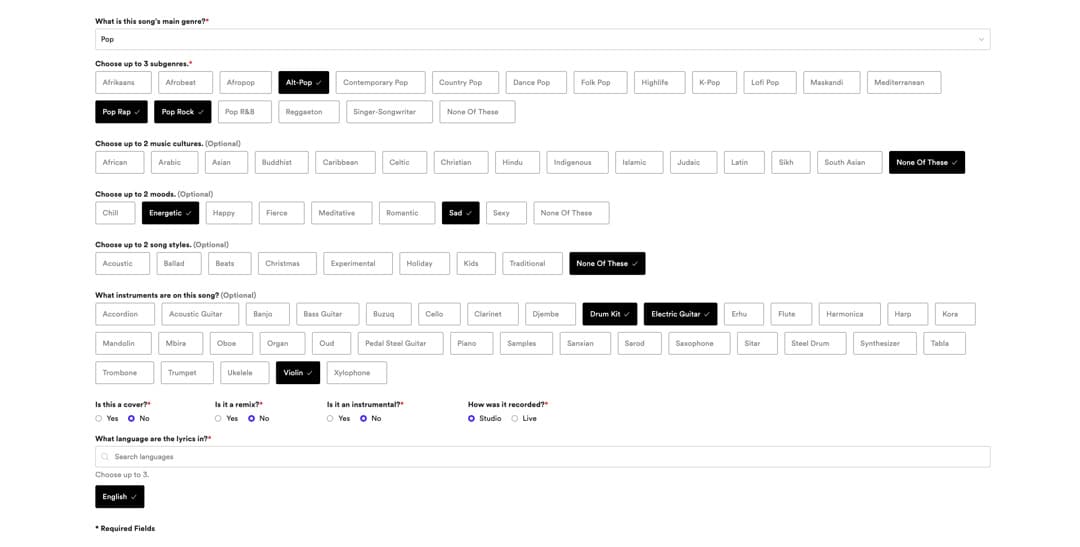
- Metadata is accurate (song title, artist name, genre tags, mood tags)
- ISRCs are assigned
- Split sheets are signed with all collaborators
- Distributor is selected (Boost Collective offers free distribution as one option)
This isn’t glamorous work, but sloppy metadata confuses algorithms and costs you placements.
#4 – DSP Domination: Playlists, Algorithms & Distribution
In 2026, you must treat Spotify, Apple Music, Deezer, Amazon Music, and YouTube Music as search engines and discovery feeds not just music players. Understanding how these platforms work is essential to your promotion strategy.
Three Types of Playlists
Not all playlists are created equal:
| Type | Description | How To Get On |
|---|---|---|
| Editorial | Curated by platform staff (e.g. Today’s Top Hits) | Pitch through Spotify for Artists; relationships matter |
| Algorithmic | Generated by the platform (Discover Weekly or Release Radar or Radio) | Driven by saves & skips & completion rates & engagement |
| Independent or User | Created by curators or blogs and fans | Outreach via email Instagram or promotion services |
For a comprehensive back-end look at the Spotify algorithm, checkout this well made video by Andrew Southworth:
While editorial playlists get all the attention, algorithmic playlists often drive more meaningful, sustained engagement for indie artists. These lists respond directly to how listeners interact with your music.
How to Pitch to Spotify for Artists
Submit your pitch at least 3–4 weeks before your release date. Your pitch should include:
- A specific story about the song (not generic “this is a banger”)
- Accurate genre tags
- Mood descriptors
- Target territories where you have existing traction
Generic submissions get ignored. Specific, compelling pitches get attention.
Independent Playlist Strategy
User-curated playlists on Spotify and YouTube Music are often undervalued. Research curators in your niche and approach them via Instagram DMs or email with personalized pitches. Don’t spam build relationships.
Boost Collective’s playlist promotion service helps artists get organic placements on niche playlists through data-driven campaigns. Instead of chasing one big editorial slot, stack placements across multiple relevant playlists to build sustainable momentum.
Smart Metadata Matters
Your genre tags, mood descriptors, language settings, and instrument tags all feed the algorithm. Misleading tags might get you onto a playlist temporarily, but listeners will skip, and the algorithm will punish you. Be accurate.
Distribution Choice
Your distributor affects payout schedules, ownership terms, and access to features. Distribution options (like Boost Collective’s) can fit a 2026 indie strategy without eating into your budget. Evaluate based on:
- Payout timing
- Revenue split
- Catalog ownership
- Platform integrations
#5 – Algorithm Warfare: Direct-to-Song Meta Ads Strategy
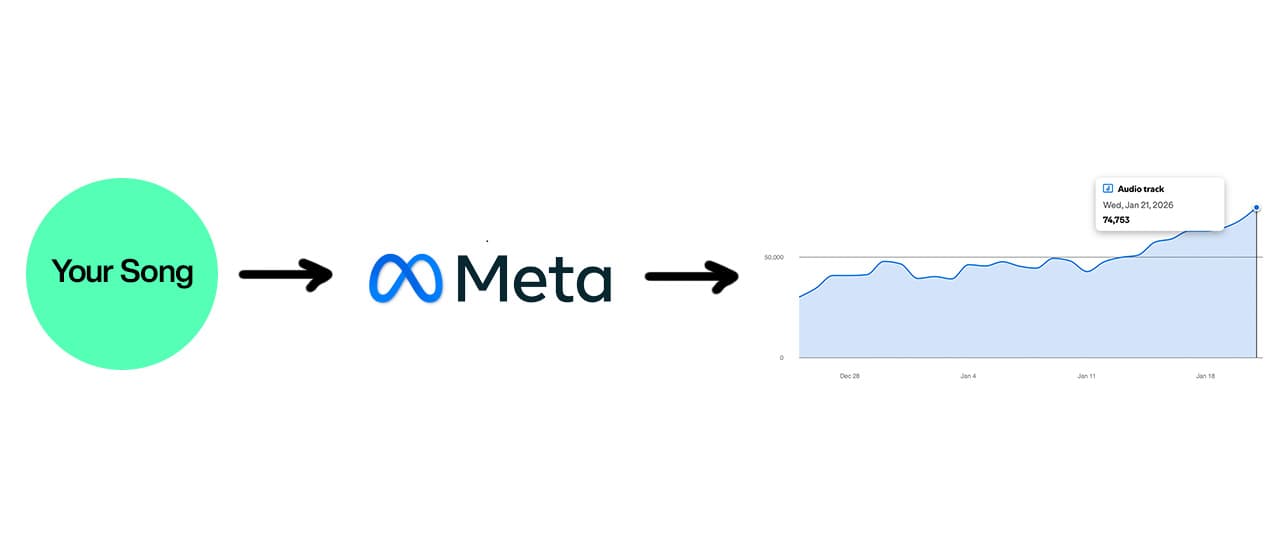
In 2026, paid traffic must go directly to the song not just your profile especially when you’re trying to trigger Spotify and Apple Music algorithms.
What Are Direct-to-Song Meta Ads?
These are Instagram and Facebook campaigns designed to send listeners straight to a specific track on Spotify, Apple Music, or YouTube Music. The goal is concentrated engagement in any given 28 day period (especially on Spotify), which signals to algorithms that your track deserves to be recommended to more users.
Building a Basic Conversion Campaign
Here’s a simplified framework for your release campaign:
Campaign Objective: Traffic or conversions (depending on your setup)
Ad Set Targeting:
- Fans of similar artists in your genre
- Interest-based audiences (music production, specific subgenres)
- Lookalike audiences based on your existing fans
Ad Creatives:
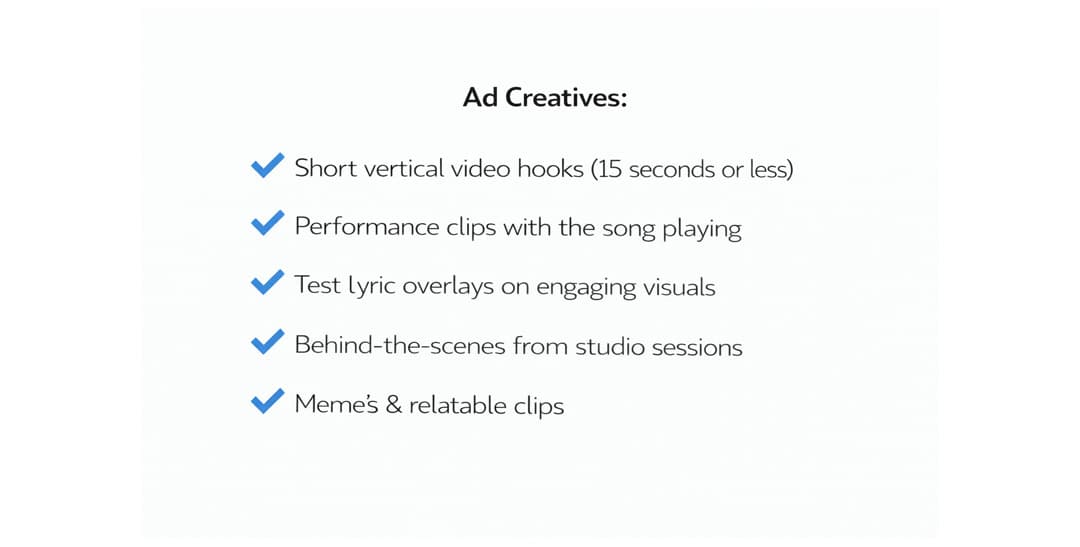
- Short vertical video hooks (15 seconds or less)
- Performance clips with the song playing
- Test Lyric overlays on engaging visuals
- Behind-the-scenes from studio sessions
- Meme's & relatable clips
Deep Links and Smart Links
Use tools that create deep links URLs that redirect iOS and Android users to their preferred DSP automatically. This removes friction and increases conversion rates. Services exist that let you create these landing pages in minutes.
Priming & Testing the Algorithm
The strategy here is “priming”: concentrate streams, saves, and adds in the first 3 days using small ad budgets of $5–$20/day.
This targeted advertising approach signals to algorithms that your track has the ability to generate a lot of momentum, triggering algorithmic recommendations.
Checkout this campaign that we primed, locked in a very effective conversion cost, and then increased our daily ad spend, which scaled the song very nicely.
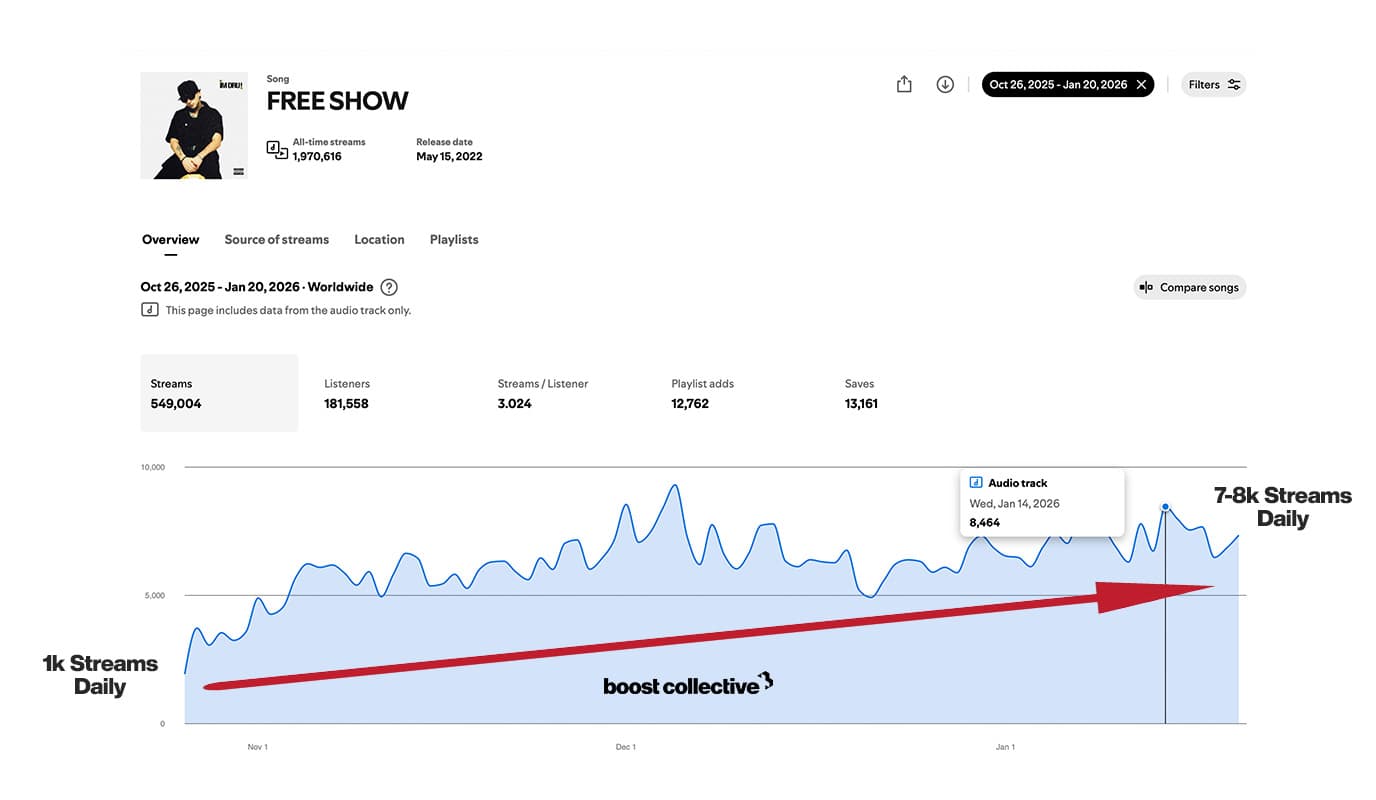
We we're able to gain over 550,000 streams for ~$2,200 spent on "FREE SHOW" by artist I'm Dru!
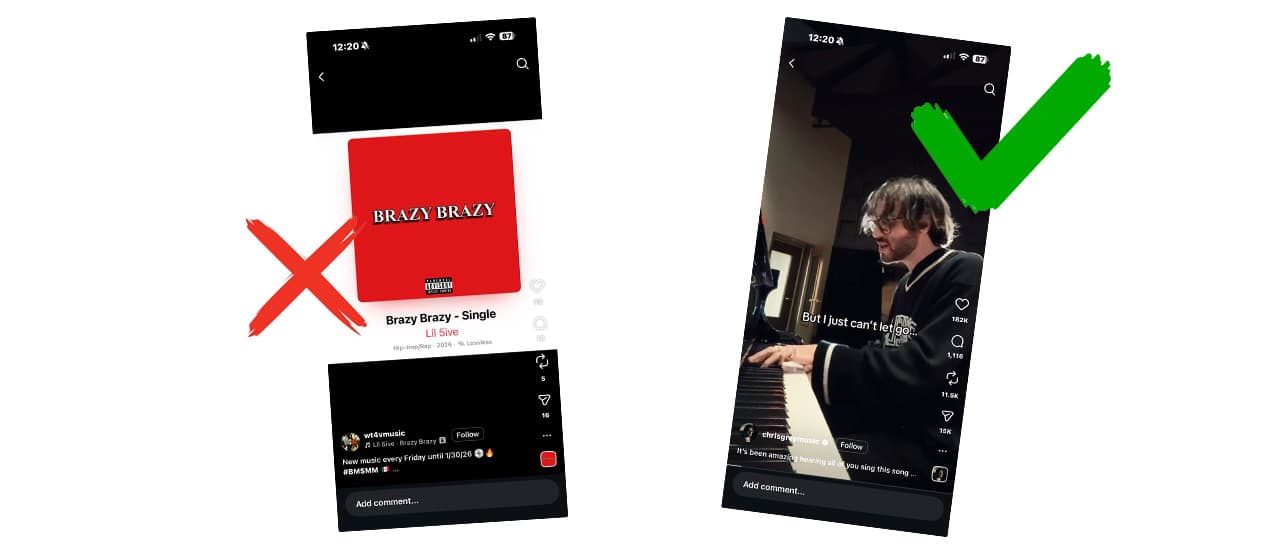
Make Ads Look Organic
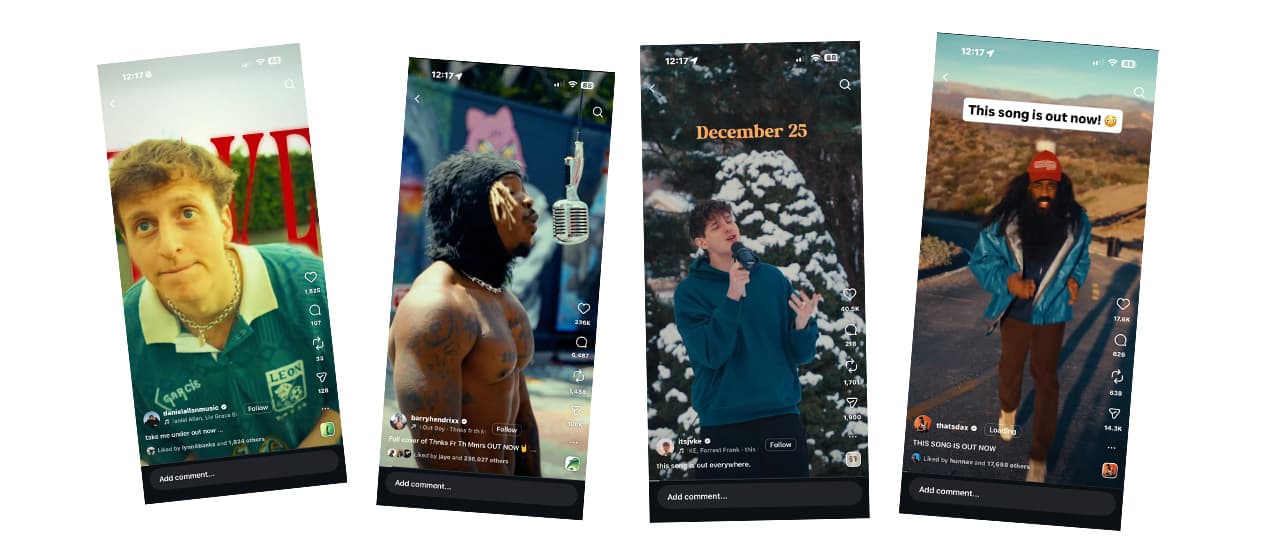
Your ads should look like organic content not polished traditional commercials. The content that performs best is:
- Raw performance clips
- Behind-the-scenes moments
- Lyric videos with text overlays
- Content that feels native to the platform
Think the modern doom scroll sessions... Is your ad disrupting the flow their scrolling session? If it is... you'll want to rethink your creative strategy.
Boost Collective can help design campaigns that pair direct-to-song Meta strategies with playlist promotion to maximize algorithmic lift. The combination of paid traffic and organic playlist placements creates compound effects.
#6 – Social Media in 2026: Short-Form, Depth & Discovery
Short-form video still dominates discovery in 2026. TikTok, Instagram Reels, and YouTube Shorts are where new listeners find music. But here’s what many artists miss: discovery content gets attention, while depth content builds the fan base.
The Three Content Pillars
Every artist needs a mix of:
| Pillar | Purpose | Examples |
|---|---|---|
| Discovery | Wide reach & new audiences | Trending clips + viral hooks + short form videos |
| Relationship | Personal connection & fan loyalty | Vlogs & stories + behind-the-scenes or creative process content |
| Conversion | Drive specific actions | Pre-save links or merch drops & ticket sales |
Platform Strengths
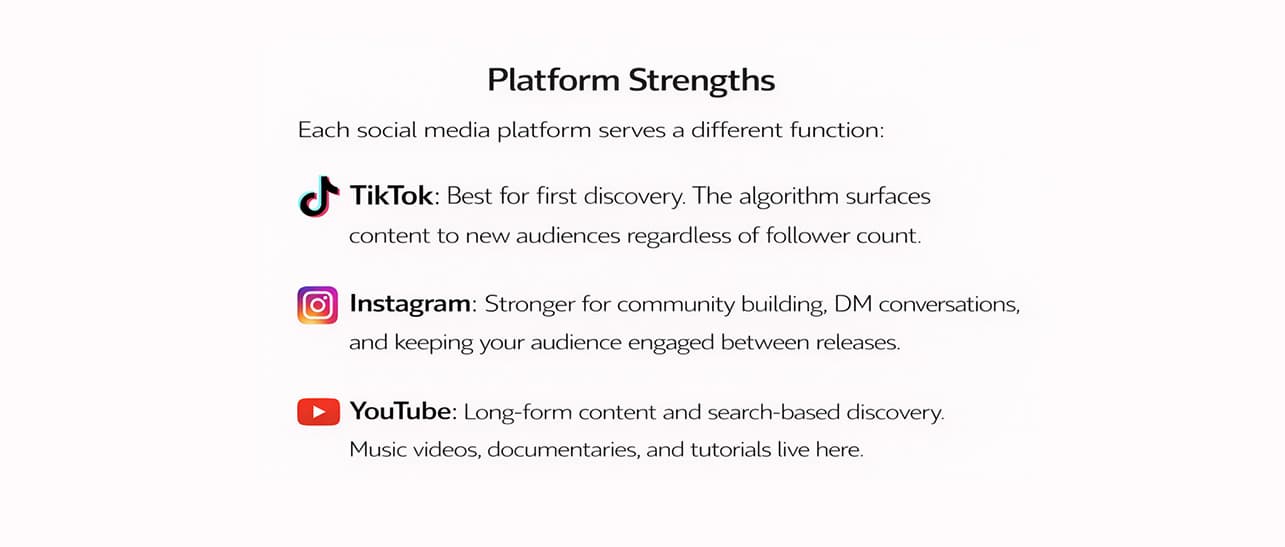
Each social media platform serves a different function:
- TikTok: Best for first discovery. The algorithm surfaces content to new audiences regardless of follower count.
- Instagram: Stronger for community building, DM conversations, and keeping your audience engaged between releases.
- YouTube: Long-form content and search-based discovery. Music videos, documentaries, and tutorials live here.
Specific Content Ideas
Stop posting generic “new music out now” graphics. Instead, create content like:
- 15-second chorus performances with direct eye contact
- Duet-friendly clips with open verses for fan participation
- “How I made this beat” breakdowns showing your creative process
- Lyric breakdowns explaining the meaning behind your songs
- Day-in-the-life tours of your studio sessions or life on the road
- Trend participation that aligns with your artistic identity
Consistency Over Virality
Aim for 3–5 posts per week per main platform with a repeatable content rhythm. Virality is unpredictable; consistency compounds over time. Artists who show up regularly build deeper relationships than those chasing every trending sound.
Don’t chase every trend blindly. If a trend doesn’t fit your vibe, skip it. Your social media engagement should reflect your authentic strengths whether that’s performance, storytelling, humor, or education.
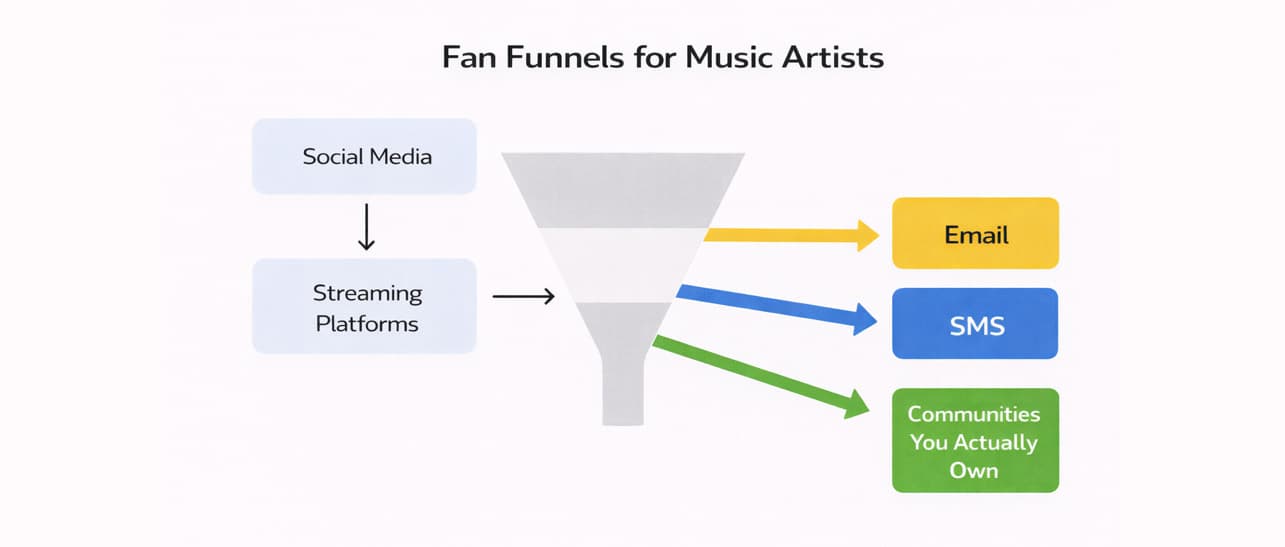
#7 – Fan Funnels: Email, SMS & Communities You Actually Own
Here’s a truth that keeps many artists up at night: algorithms and platforms can change overnight. A single TikTok update can tank your reach. An Instagram algorithm shift can make your content invisible.
But email lists, SMS lists, and private communities remain under your control. These are owned assets that no platform can take away.
Email as Foundation
Set up a simple email system (Mailchimp, ConvertKit, Mailerlite or similar) to send:
- Release announcements before they go public
- Tour dates and ticket presales
- Behind-the-scenes letters and exclusive content
- Early access to merch drops
An email list of 500 engaged fans is worth more than 50,000 passive followers. These are your true fans the ones who will buy tickets, stream repeatedly, and tell their friends about you.
SMS for Superfans
SMS has higher open rates than email or social media posts. Use it for:
- Early access to releasing music before official release day
- Ticket presales for upcoming releases on tour
- Exclusive drops (merch, demos, unreleased tracks)
- Time-sensitive announcements
Keep SMS reserved for your most engaged fans it’s a high-intent channel that should feel special.
Community Hubs
Build private spaces for your 100–1,000 true fans:
- Discord servers with exclusive channels
- Instagram broadcast channels
- Private Telegram groups
- Patreon-style membership tiers
These spaces create deeper understanding between you and your fans. They’re also where you can test new music, get feedback, and create content for your inner circle.
A Simple Fan Journey Example
Here’s how a casual listener becomes a superfan:
- TikTok clip catches their attention (discovery)
- They follow you on Spotify and listen to more tracks
- They visit your website and sign up for email
- They join your Discord for exclusive content
- They buy tickets to your show and sell merch to their friends
Every marketing effort should move fans along this journey.
#8 – Beyond Streams: Monetizing in 2026 (Merch, Digital Products & Experiences)
Let’s be direct: streams alone rarely pay the bills. At fractions of a cent per stream, you need over ten million streams a year to generate meaningful income from streaming alone. The 2026 winners stack multiple income streams around the music.
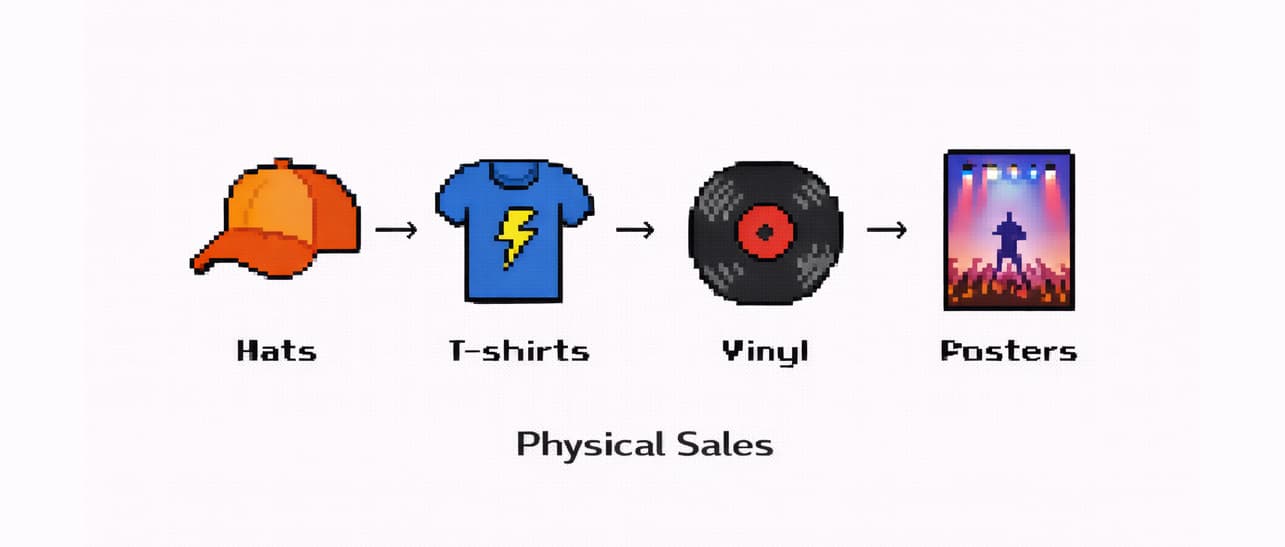
Physical and Print-on-Demand Merch
You don’t need warehouse inventory anymore. Print-on-demand services let you offer:
- T-shirts and hoodies ($20–$40 range)
- Hats and accessories
- Lyric posters and art prints
- Limited drops tied to specific singles or eras
Small, focused merch drops tied to releases create urgency and give fans something tangible to connect with.
Digital Products
Your creative skills are sellable beyond just finished songs:
- Sample packs and drum kits ($30–$60)
- MIDI kits and preset banks
- Instrumental versions of your tracks
- Stem packs for remixers
- Mini-courses on production or songwriting
These products can generate passive income and position you as a resource within your genre community.
Ticketed Experiences
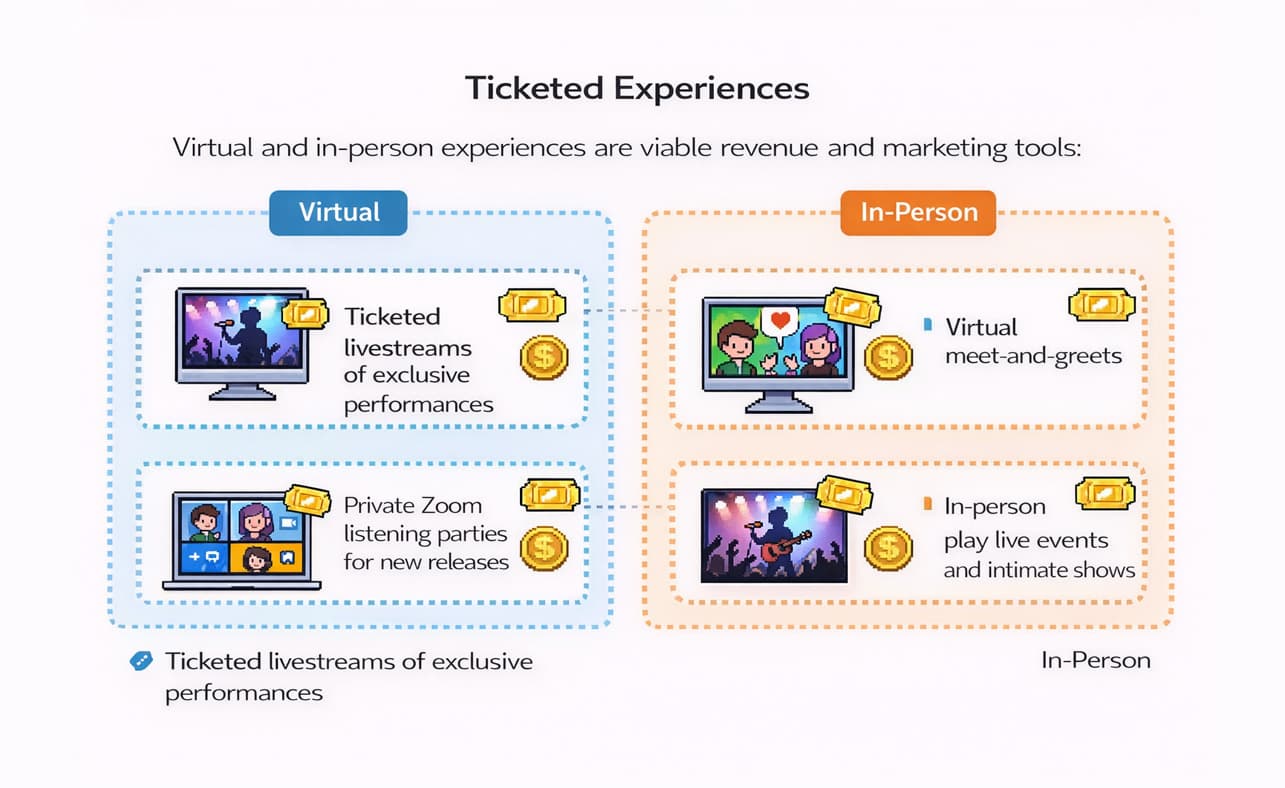
Virtual and in-person experiences are viable revenue and marketing tools:
- Ticketed livestreams of exclusive performances
- Private Zoom listening parties for new releases
- Virtual meet-and-greets
- In-person play live events and intimate shows
These don’t need to be massive productions. Even a 50-person listening party creates memorable moments that turn listeners into lifetime fans.
Subscription Models
Recurring revenue provides stability:
- Patreon tiers ($5–$10/month)
- Grouped community subscriptions
- Private membership tiers with monthly exclusive songs, demos, or Q&A sessions
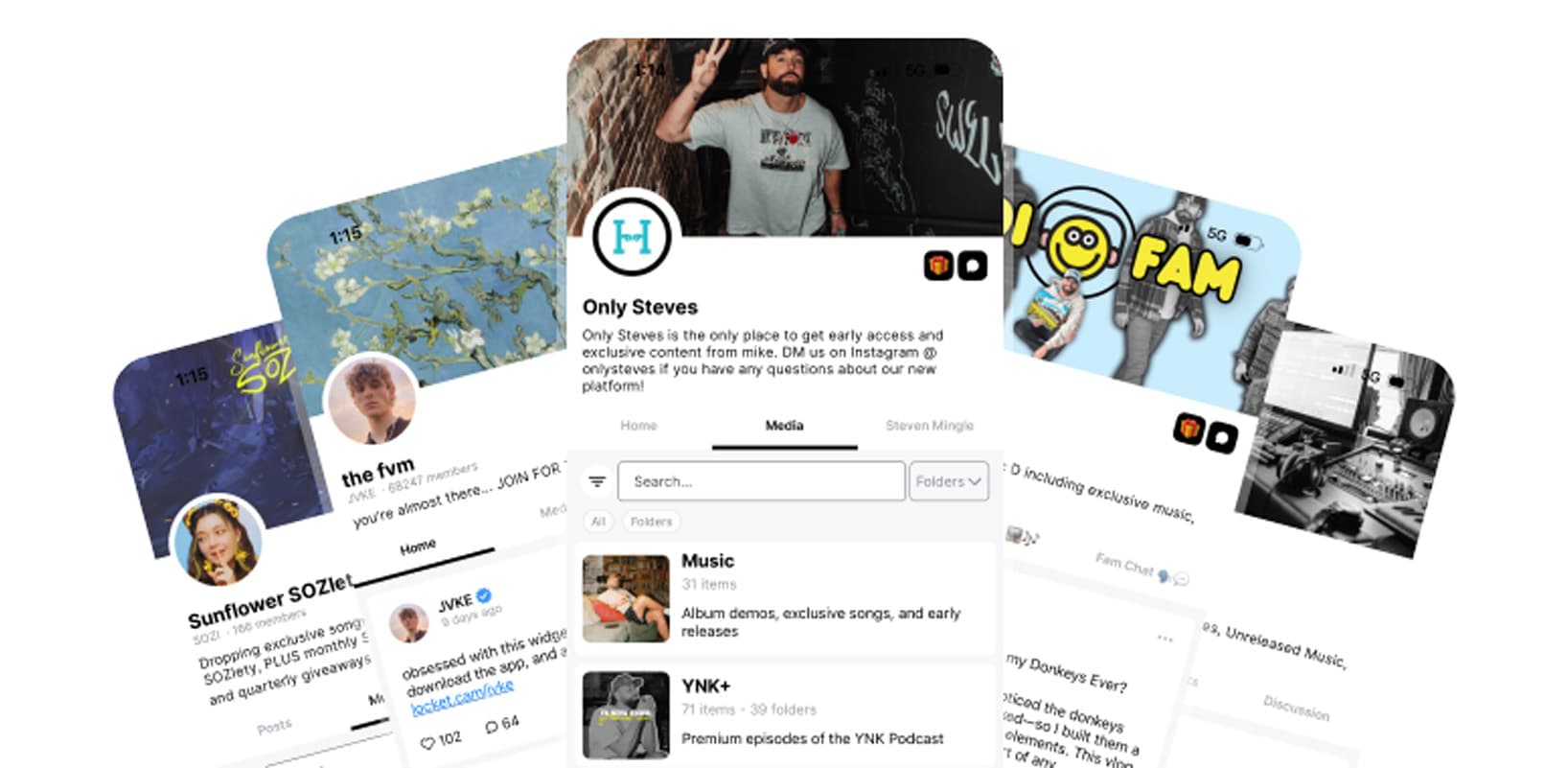
Even 100 subscribers at $7/month generates $700 in predictable monthly income often more than streaming revenue for many indie artists.
Boost Collective campaigns can test which tracks and audiences respond strongly enough to justify new merch or digital product launches.
#9 – Collaboration, Influencers & UGC: Let Fans Spread the Music
In 2026, discovery heavily relies on micro-collaborations, remixes, and user generated content rather than just top-down promotion. Your fans and peers are your distribution network.
Strategic Artist Collaborations
Features with artists in neighboring genres expose you to new listeners who already trust the collaborator’s taste. Consider:
- Feature & Primary Artist slot swaps with artists at similar career stages
- Producer collaborations that bring different sonic textures
- Cross-posting campaigns where both artists promote the track to their audiences
The key is finding collaborators whose audience overlaps with but isn’t identical to yours.
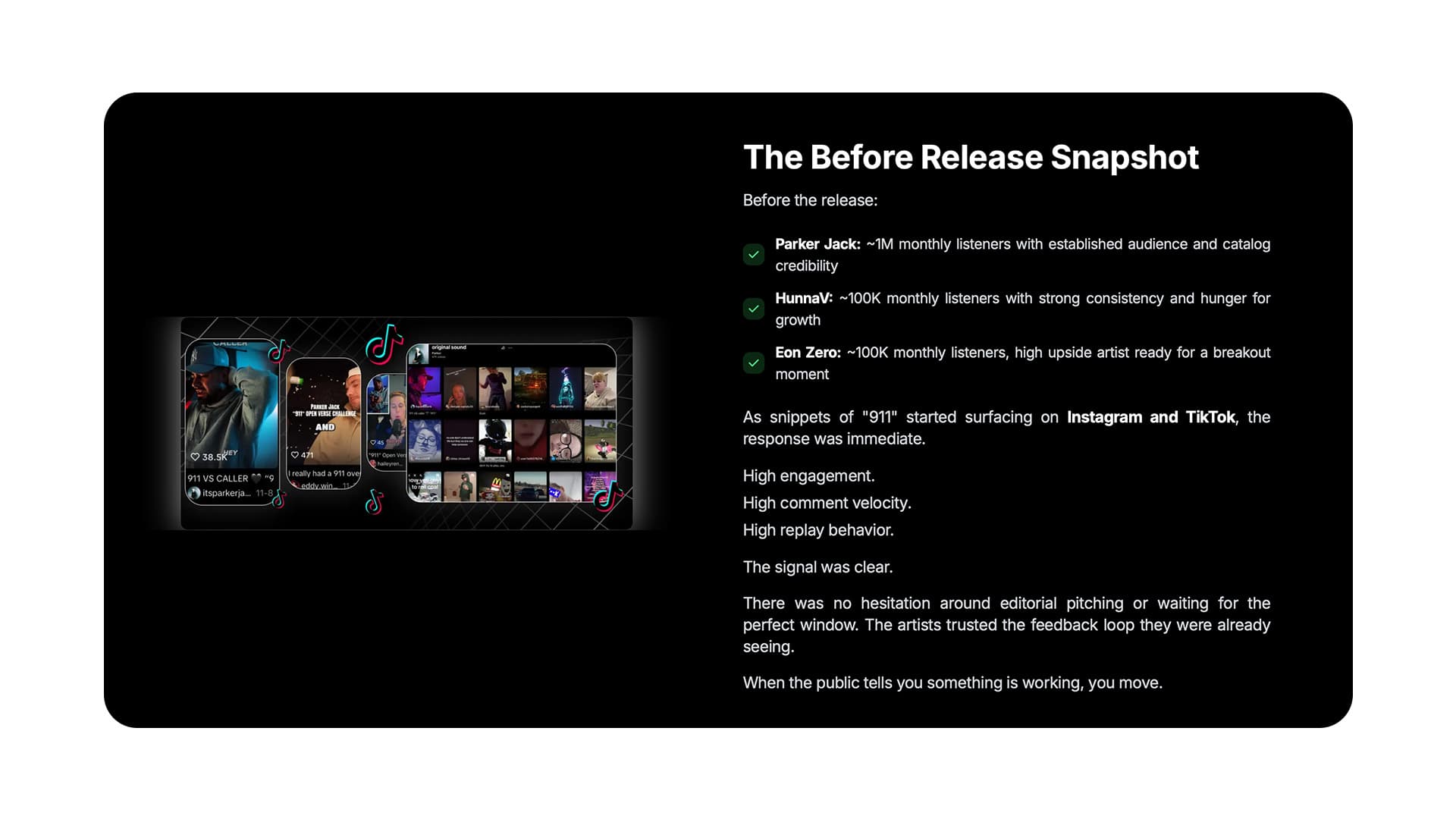
A strong example of this is “911,” a collaboration between Parker Jack, HunnaV, Eon Zero, and Jake Luke that was promoted by Boost Collective. By combining their audiences, the release launched with built-in momentum and immediate reach. As a result, both HunnaV and Eon Zero grew from roughly 100,000 monthly listeners on Spotify to a peak of over 500,000 monthly listeners. Read more about how Boost Collective promoted 911 here!
Influencer Partnerships with Micro-Creators
Forget chasing celebrities with millions of followers. Micro-creators (5k–100k followers) on TikTok, Instagram, and YouTube often deliver better ROI through influencer partnerships. These creators integrate your track naturally into their content workout videos, vlogs, transitions, aesthetic reels.
The key is finding creators whose aesthetic and audience align with your sound, not just anyone willing to post your track.
Design Songs and Assets for UGC
Make it easy for fans to create content with your music:
- Release sped-up versions for trending formats
- Provide acapellas for remixes
- Create open verse sections where fans can add their own lines
- Design danceable sections or movements fans can replicate
- Write lyrics that work as challenges or meme formats
Track and Reshare Fan Content
When fans create content with your music, engage with it:
- Reshare user generated content in your Stories and Reels
- Duet or stitch fan videos
- Comment and engage with creators using your tracks
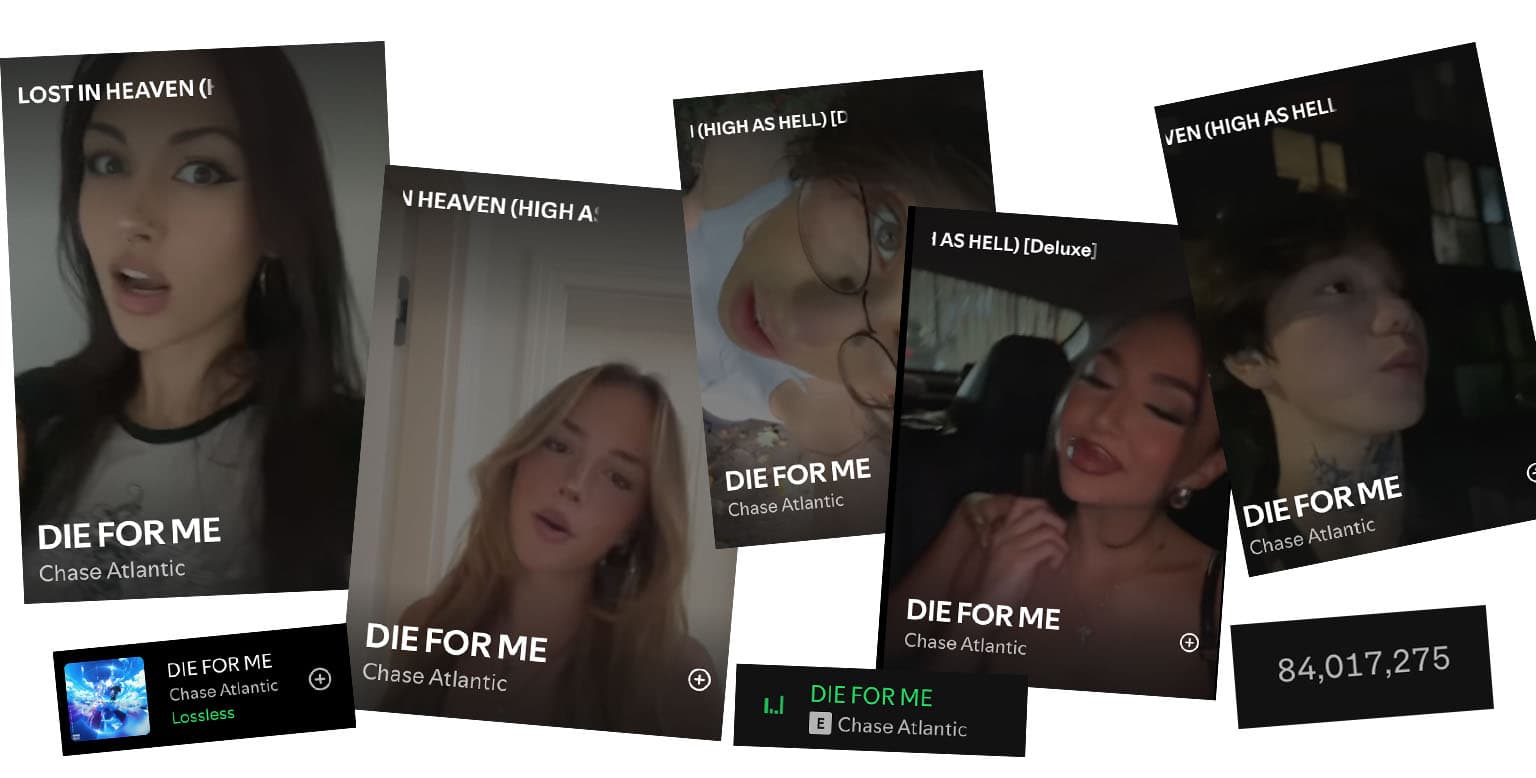
This rewards fans for their participation and signals to algorithms that your track is generating engagement.
Using Boost Collective playlist and marketing campaigns to create an initial burst of attention makes UGC more likely to take off. When fans see a track gaining momentum, they’re more inclined to participate.
#10 – Measuring What Matters: Analytics, KPIs & Iteration
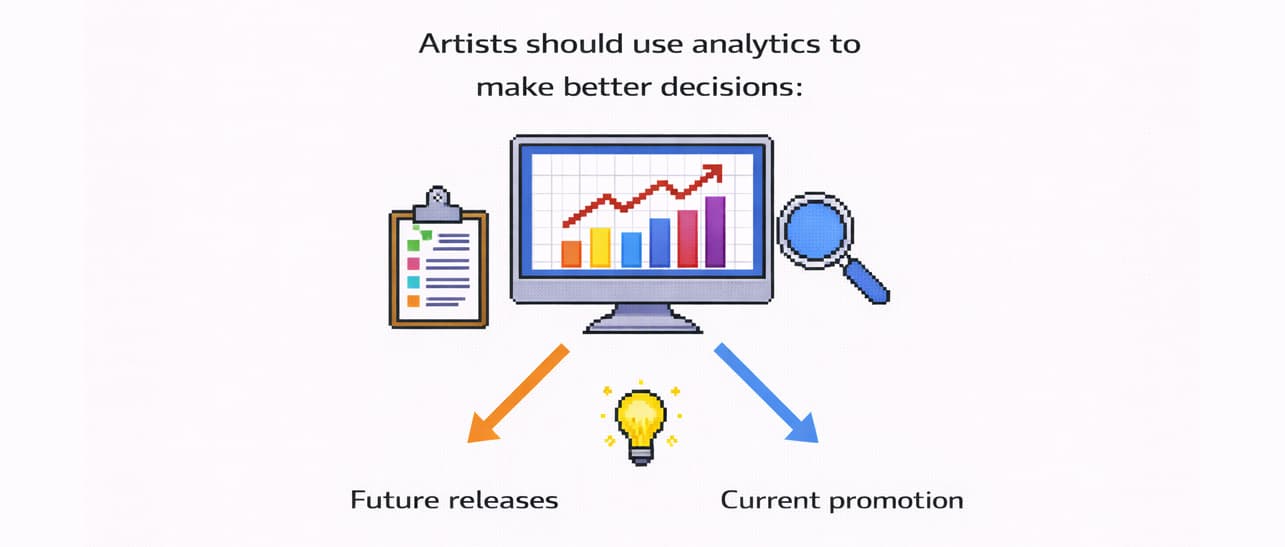
In 2026, artists must think like small data-driven labels. Watching your numbers matters but knowing which numbers actually matter is what separates pros from amateurs.
Key Performance Indicators to Track
Focus on metrics that indicate real engagement:
| Metric | Why It Matters |
|---|---|
| Saves per listener | Shows intent to return |
| Skip rate | Indicates song quality and audience fit |
| Completion rate | Measures how engaging your track is |
| Playlist adds | Shows organic distribution |
| Follower growth | Tracks audience building |
| Email signups | Measures owned audience growth |
| Click-through rate | Shows content effectiveness |
| Ad cost per meaningful action | Measures campaign efficiency |
Platform Analytics Tools
Use the native tools available:
- Spotify for Artists: Listener demographics, playlist placements, save rates
- Apple Music for Artists: Stream data, Shazam tags, regional performance
- YouTube Studio: Watch time, click-through rates, audience retention
- TikTok Analytics: Video views, completion rates, audience demographics
- Instagram Insights: Reach, engagement, profile visits
A Real-World Example
Imagine you run a release campaign and notice your song has high saves and low skips in Germany and Brazil, but underperforms in the US. This data tells you exactly where to focus your follow-up efforts:
- Target your next ad campaign to Germany and Brazil
- Create content that resonates with those regions
- Research playlists popular in those territories
- Consider collaborating with artists from those markets
Monthly Review Habit
Schedule 60–90 minutes each month to evaluate:
- Which content performed best
- Which ad campaigns delivered results
- Which playlist placements drove real engagement
- Revenue from all streams
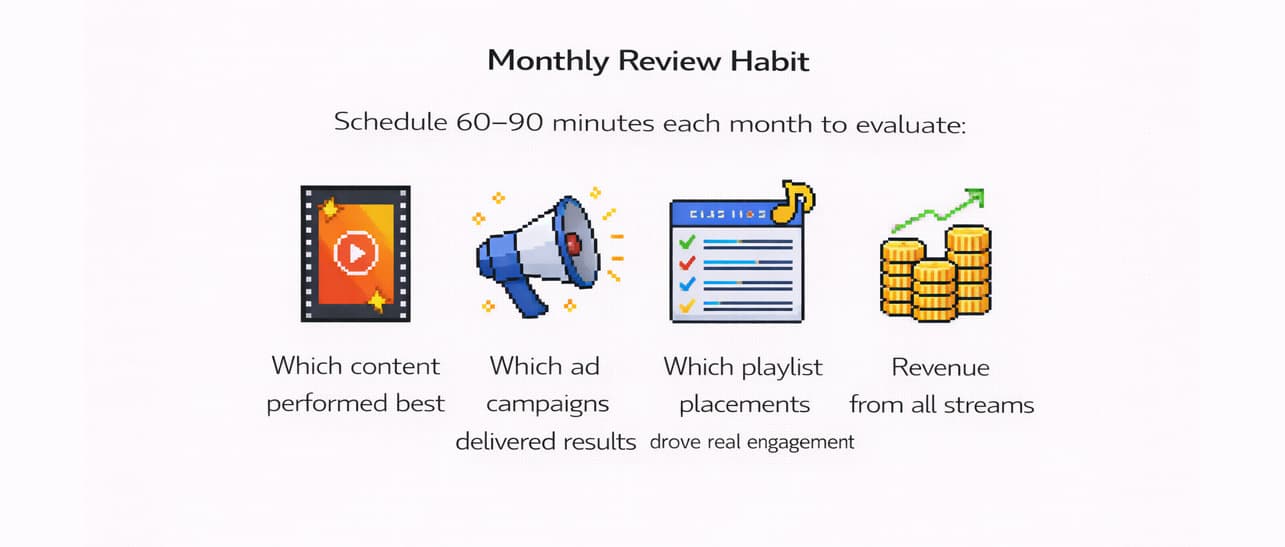
Then adjust your strategy based on what the data tells you. This iterative approach compounds over time.
Boost Collective’s dashboard simplify reading quality playlist placements, helping indie artists make data-driven decisions without getting lost in spreadsheets.
#11 – Long-Game Mindset: Why Artists Choose You Over What Exists
The artists who succeed in 2026 won’t be the ones who got lucky with one viral moment. Success comes from a 3–5 year arc of consistent, intentional action.
The Question You Must Answer
Ask yourself honestly: “Why would a fan pick me instead of the artists I’m inspired by?”
If you can’t answer this with concrete creative and brand differences, you have work to do. The world doesn’t need another generic version of what already exists. It needs your unique perspective, sound, and story.
Continuous Improvement
Every release cycle should level up your:
- Writing: Sharper hooks, more memorable phrases, deeper emotional resonance
- Production: Better engineering, more refined sonic choices, professional production values
- Live performance: More engaging shows that turn casual listeners into superfans
- Storytelling: Clearer narrative around who you are and what you represent
The Boost Collective Philosophy
Build your skills, improve your quality, lock in your sound and make marketing moves that actually move the needle.
- Music quality must be competitive
- Brand must be recognizable and consistent
- DSPs must be optimized and actively fed new content
- Paid ads must drive targeted traffic to songs
- Playlists must be strategically stacked
- Community must be nurtured through owned channels
- Monetization must diversify beyond streams
There is no single magic tactic. There is only comprehensive, persistent execution.
Your Next Step
Pick one song your strongest unreleased track or your latest release that deserves a second push. Build a 60-day plan around it using the strategies from this guide. Deploy Boost Collective’s tools for playlist promotion, Direct to song Meta Ads, and distribution. Execute consistently.
The artists who start implementing now will be miles ahead of peers still waiting for a label or hoping for a viral miracle. Your artist career is in your hands.
Ready to launch? Sign up for Boost Collective, upload your next single, and plan a 2026-ready marketing strategy around it. The tools are here. The roadmap is in your hands. The only question is whether you’ll execute.
#12 – Quick 2026 Action Checklist
Here’s your scannable to-do list. Screenshot this and implement over the next 90 days:
Sound & Foundation
- [ ] Audit your top 3 unreleased songs against 2025–2026 reference tracks in your subgenre
- [ ] Get objective feedback from a producer or engineer (not just friends)
- [ ] Identify your “first 5 seconds” hook and memeable lyric moments
- [ ] Write your artist story in 3 sentences or less
Brand & Infrastructure
- [ ] Claim consistent @handles across all platforms
- [ ] Set up or update your website with music, bio, press photos, and email signup
- [ ] Claim and optimize Spotify for Artists, Apple Music for Artists, Amazon Music for Artists, and YouTube Official Artist Channel
Release Strategy
- [ ] Plan your next 2 release dates (4–8 weeks apart)
- [ ] Create alternative version strategy (acoustic, remix, sped-up) for each single
- [ ] Research tentpole release dates to avoid
Marketing & Promotion
- [ ] Submit Spotify for Artists pitch 3–4 weeks before release
- [ ] Apply for Boost Collective playlist promotion and distribution
- [ ] Plan direct-to-song Meta ads with $5–$20/day budget for launch week
- [ ] Create 10–15 short-form video clips per release cycle
Fan Building
- [ ] Set up email capture on your website
- [ ] Create a Discord or community space for superfans
- [ ] Map out your fan journey: discovery → follow → email → community → purchase
Monetization
- [ ] Identify one merch item or digital product to launch with your next release
- [ ] Consider a subscription tier for exclusive content
Re-evaluate every quarter of 2026. The artists who build momentum now will have compounding advantages by year’s end. Stop waiting. Start executing.


